Books
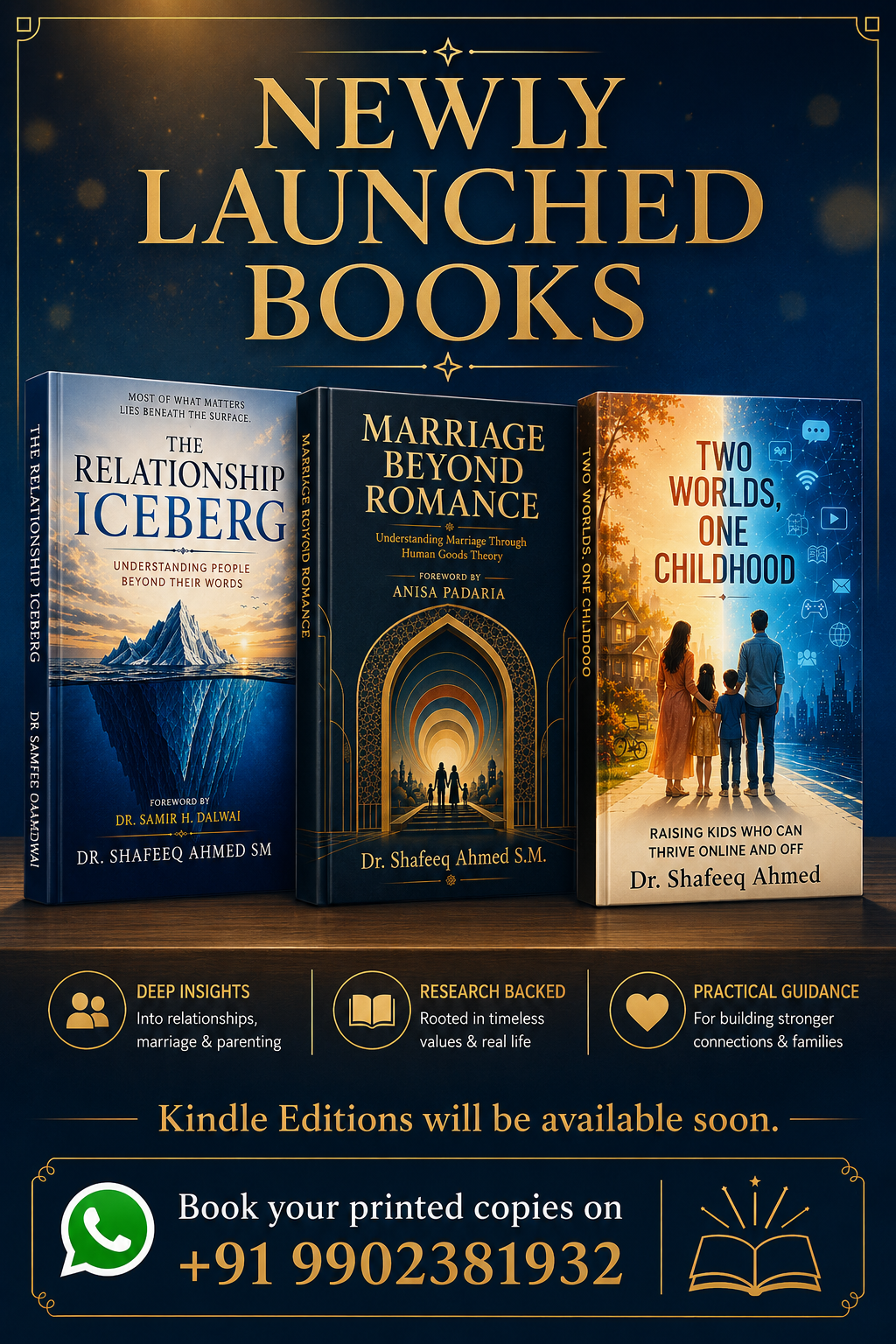
Books by Dr. Shafeeq Ahmed
Practical, evidence-based guidance drawn from 20+ years across paediatrics, child psychology, parenting, and relationship counselling.
Available now
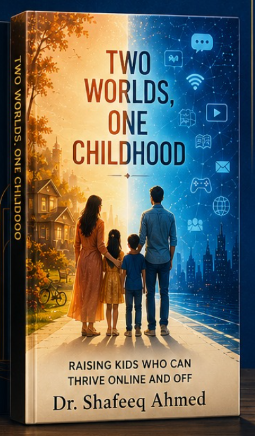
Two Worlds, One Childhood: Raising Kids Who Can Thrive Online and Off
Released September 2026
Details are being finalised — join the notify list to be first to know.
Author's Note
Why I wrote Two Worlds, One Childhood: Raising Kids Who Can Thrive Online and Off
I wrote this book because so many parents I meet — in clinic, at school, in everyday conversation — are anxious about their children's digital lives but have nowhere to turn for guidance that feels practical rather than alarmist. As a pediatrician and child psychologist, I wanted to move past the fear-based 'screens are bad' narrative and ask a more useful question: what kind of person are we actually helping our child become, both online and off? This book is my attempt to give parents warm, evidence-informed, non-judgmental guidance for raising resilient, capable kids who can navigate both worlds — the digital and the real — without shame or panic on either side.
Available now
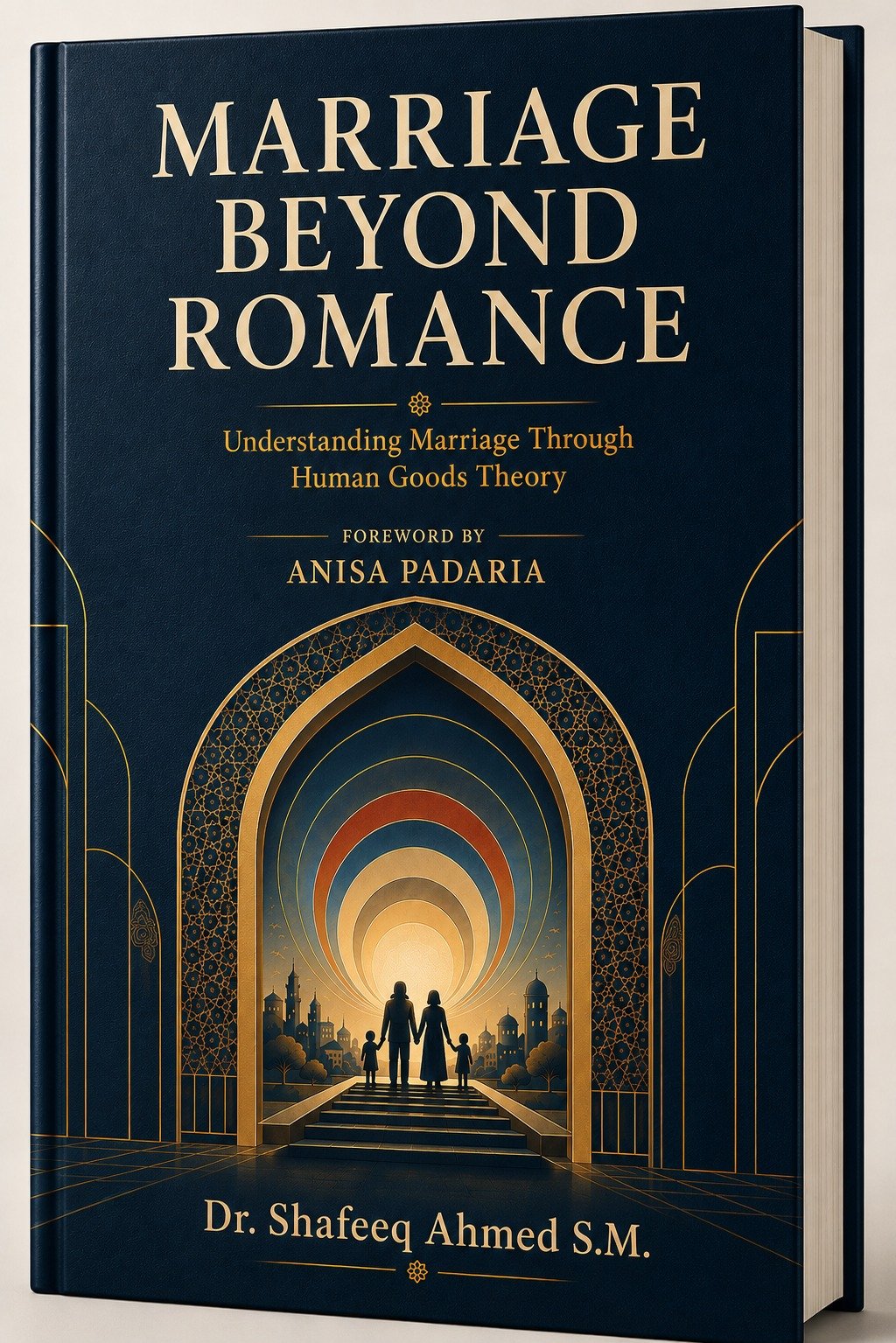
Marriage Beyond Romance: Understanding marriage through the Human Goods Theory
Released August 2026
Understanding marriage through the Human Goods Theory — Dr. Shafeeq's book on building stronger, deeper relationships.
See where to buyAuthor's Note
Why I wrote Marriage Beyond Romance: Understanding marriage through the Human Goods Theory
I wrote this book because I kept watching couples measure their marriages against a standard that was never built to last: the feeling of being in love. Romance is real, and it matters — but it rises and falls, and a marriage that depends on it staying at flood level is a marriage waiting to run dry. In my clinical work, and in my own life, I saw again and again that the couples who endured were not the ones who never lost the spark. They were the ones who had built something sturdier alongside it. That "something sturdier" is what I call the Human Goods Theory: the idea that a lasting marriage is held together by enduring goods — shared duties, mutual ownership of a life, equity of access to what each partner needs, and a commitment to each other's flourishing — not by romantic feeling alone. Looking across history and across cultures, from classical philosophy to contemporary family research, I found this pattern again and again: societies and thinkers who understood marriage well never asked couples to run on romance alone. I wrote this book to give couples, and the professionals who counsel them, a different question to ask than "are we still in love?" — namely, "are we still building something good, together?" That question, I've found, is one a marriage can actually stand on. This is not a book against romance. It is a book for a love resilient enough to survive its own quiet seasons.
Available now
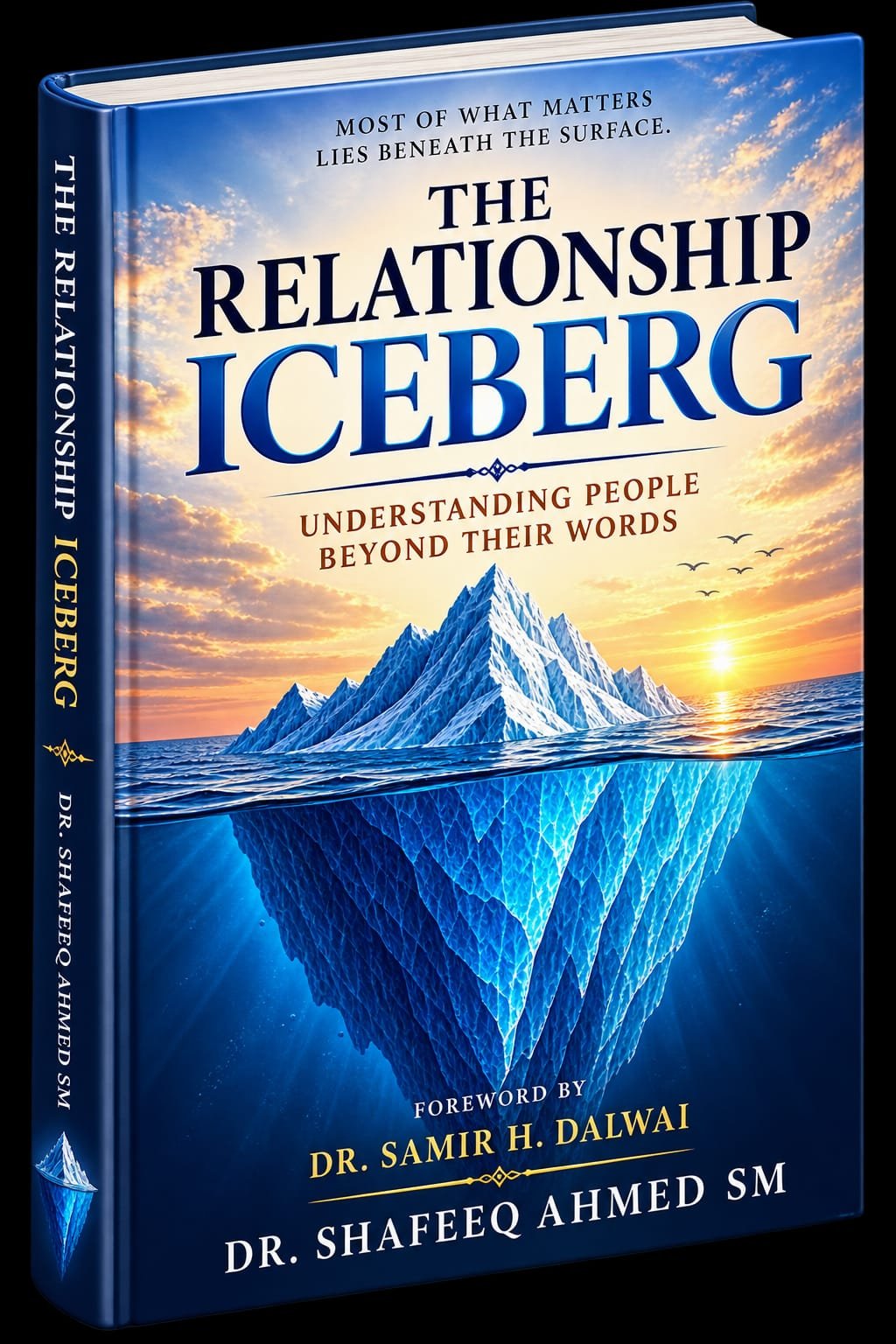
The Relationship Iceberg: Understanding people beyond their words
Released August 2026
Understanding people beyond their words — most of what matters lies beneath the surface. Foreword by Dr. Samir H. Dalwai.
See where to buyAuthor's Note
Why I wrote The Relationship Iceberg: Understanding people beyond their words
I wrote The Relationship Iceberg because, over years of clinical work, I kept seeing the same pattern: the words people say are almost never the whole story. A child's tantrum, a couple's silence, a friend's sudden distance — the real cause is almost always sitting beneath the surface, in the tone, the unspoken need, the old wound, the belief they've never said out loud. Most of us are trained to react to the 10% we can hear, while the 90% that actually drives behaviour goes unnoticed. This book grew out of wanting to give people a practical way to see that hidden 90% — not as therapists or psychologists, but as parents, partners, friends, and colleagues navigating ordinary relationships. It's built on the conviction that understanding people isn't a gift some are born with; it's a skill anyone can learn, the same way trust is built — not in grand gestures, but in drops, over time. My hope is that readers close this book not just with theory, but with a genuinely different way of listening — one that catches what's beneath the words, before it turns into distance.
Where to Buy