Vitamin D for Babies
Babies need vitamin D for healthy growth and development — it helps them build strong, healthy bones and teeth. Babies who don't get enough are said to have a deficiency, and if levels are low enough, they're at risk of rickets, a disease that affects how bones grow and develop.
You can make sure your baby has enough vitamin D by giving a daily supplement (drops), starting as soon as your baby is born. Babies who are breastfed should get 400 IU (international units) per day; babies with other risk factors — such as darker skin, or living somewhere with less year-round sunlight — should get 800 IU per day during the months with less sunlight.
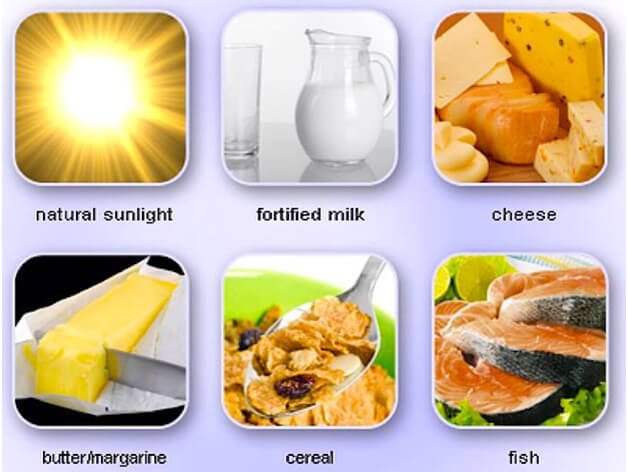
How do we get vitamin D?
- Sunlight: vitamin D forms naturally when skin is exposed to sunlight, but at certain times of year and in certain places sunlight isn't enough. Sunscreen and clothing, which protect babies from the sun's harmful effects, also block vitamin D formation.
- Foods: some foods — like salmon, tuna, and liver — are good sources of vitamin D.
- Vitamin supplement: for babies, this comes in liquid form and is given daily with a dropper. Use a supplement meant for babies, read the instructions carefully, and ask your pharmacist if you're unsure of the amount.
Who's most at risk of deficiency?
Babies are most at risk if they are breastfed, if their mothers don't have enough vitamin D, if they have darker skin, or if they live somewhere with limited sunlight for part of the year. All breastfed babies should get a daily vitamin D supplement.
How much vitamin D should my baby receive?
Babies who are breastfed should get 400 IU per day; babies with risk factors should get 800 IU per day during months with less sunlight. If you're unsure of the right amount, talk to your health care provider.
Why do breastfed babies need a supplement?
Breast milk is the best food for your growing baby, and you can continue breastfeeding until 2 years of age and beyond. But breast milk contains only small amounts of vitamin D (4 to 40 IU per litre) — not enough to meet your baby's needs on its own. That's why breastfed babies should receive a daily vitamin D supplement from birth until they get enough from their diet.
If I eat vitamin D-rich foods while breastfeeding, does my baby still need a supplement?
Yes. Even a diet rich in vitamin D won't enrich your breast milk enough to meet your baby's needs. If you're breastfeeding, talk to your doctor about whether a supplement of 2,000 IU/day is right for you.
Do formula-fed babies need extra vitamin D?
Since vitamin D is already added to infant formula, most full-term formula-fed babies don't need a supplement. Formula-fed babies with risk factors should still receive 400 IU/day during months with less sunlight.
Should pregnant women take vitamin D supplements?
How much vitamin D you get while pregnant affects how much your baby has at birth — a baby born to a vitamin D-deficient mother is more likely to be deficient too. You're more likely to be deficient if you don't use vitamin D-fortified products, don't get much sun exposure, or don't take a supplement. If you're pregnant, talk to your doctor about whether a supplement of 2,000 IU/day is right for you.
Dr. Shafeeq Ahmed S.M
Pediatrician, child psychologist, parenting coach, and career & life counsellor with over 20 years of experience. Read full bio →